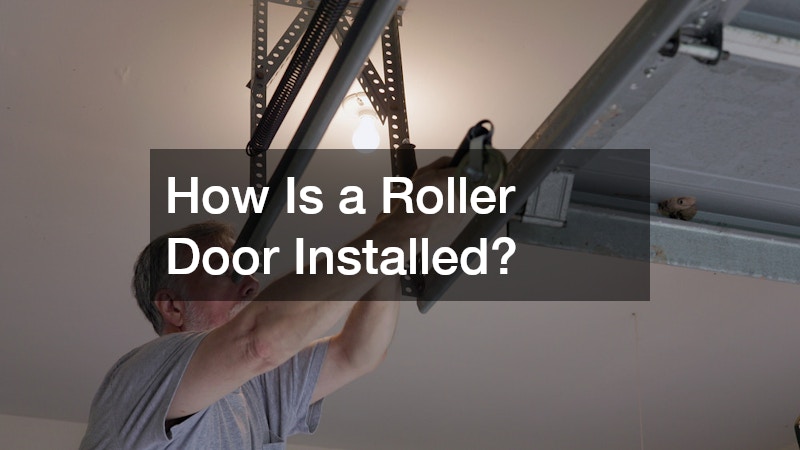
If you’re thinking about upgrading your garage or securing a shed, a roller door is one of the most practical options out there. It’s simple, space-saving and reliable, which is why you’ll see it on homes, workshops and commercial buildings all across Australia.
But how is a roller door actually installed? While it might look straightforward when you see one in action, there’s a fair bit of precision involved to make sure everything runs smoothly and safely.
What a Roller Door Is
It helps to understand what makes a roller door different from other types of doors. A roller door is made up of horizontal slats that roll up into a coil above the opening. Instead of swinging out or sliding sideways, it moves vertically and tucks neatly into a drum.
This design is what makes a roller door so popular, especially in tight spaces where every bit of room matters. A properly installed roller door should open and close effortlessly with minimal noise.
Step 1: Measuring the Opening
The first step in installing a roller door is taking accurate measurements. This is crucial because even small mistakes can affect how the roller door operates.
Installers measure the width and height of the opening, as well as the side room and headroom available. These measurements ensure the roller door fits properly and has enough space to roll up without obstruction.
If the measurements are off, the roller door may jam, sit unevenly or wear out faster over time.
Step 2: Preparing the Site
Once measurements are confirmed, the installation area needs to be prepared. This involves checking that the frame is level, the walls are structurally sound and there are no obstacles that could interfere with the roller door.
Any old doors or fittings are removed at this stage. The surface must be clean and ready so the roller door tracks and brackets can be installed securely.
Proper preparation helps ensure the roller door operates smoothly from day one.
Step 3: Installing the Brackets and Drum
The next stage is fitting the brackets that will hold the roller door drum in place. These brackets are fixed securely to the wall on either side of the opening.
Once the brackets are in position, the drum is installed. The roller door curtain is then attached to the drum, which will later allow it to roll up and down.
This is one of the most important parts of the installation because the stability of the roller door depends heavily on how well the drum is aligned.
Step 4: Fitting the Tracks
After the drum is installed, side tracks are fitted to guide the roller door as it moves. These tracks ensure the door rolls evenly and doesn’t sway or get stuck.
The alignment of the tracks is critical. If they are not perfectly straight, the roller door may become noisy or difficult to operate.
Installers carefully adjust the tracks so the roller door moves smoothly from top to bottom without friction or resistance.
Step 5: Testing the Roller Door Mechanism
Once everything is installed, the roller door is tested multiple times to make sure it operates correctly. This includes opening and closing it manually or with a motor if it’s an automatic system.
During testing, installers check that the roller door rolls evenly, locks properly and doesn’t make unusual noises. Any adjustments are made at this stage to ensure smooth performance.
If it’s a motorised roller door, the remote control system and safety features are also tested.
Step 6: Adding Finishing Touches
After the roller door is functioning correctly, final adjustments and finishing touches are completed. This may include sealing gaps, lubricating moving parts and installing safety locks.
Installers also provide instructions on how to operate and maintain the roller door. Regular maintenance helps extend the lifespan of the door and keeps it working efficiently.
Maintaining Your Roller Door
Once installed, a roller door doesn’t require a huge amount of maintenance, but a little care goes a long way. Keeping the tracks clean and checking for debris can prevent issues over time.
It’s also a good idea to lubricate moving parts occasionally and inspect the roller door for signs of wear. If anything feels off, getting it checked early can prevent bigger problems later.
Getting Your Roller Door Installed
Installing a roller door is a detailed process that requires careful measuring, precise alignment and proper testing. While it might seem simple on the surface, each step plays an important role in ensuring the roller door works safely and smoothly.
A well-installed roller door not only improves convenience but also adds security and value to your property. Whether it’s for a garage, shed or workshop, getting the installation right makes all the difference in long-term performance.

